The Future of Military Autonomy Hinges on Trusted Data Links
Military forces across the U.S., UK, and NATO are racing to field autonomous systems faster than ever before. New investments, shifting defense strategies, and accelerated acquisition paths are...
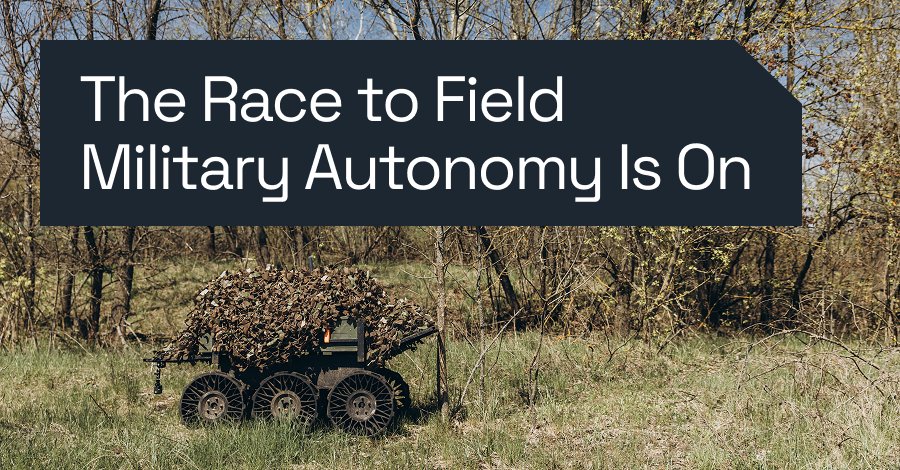
Military forces across the U.S., UK, and NATO are racing to field autonomous systems faster than ever before. New investments, shifting defense strategies, and accelerated acquisition paths are pushing programs to move from concept to deployment at commercial speed. But as unmanned aircraft, maritime vessels, ground systems, and AI-driven applications become more connected, a critical question emerges: can the information infrastructure that powers them keep pace?
The conversation has long centered on platforms - how many drones can be deployed, how quickly new capabilities can be fielded, and how AI can boost effectiveness. Yet the real value of autonomous capability comes when systems operate as part of a connected mission. Telemetry, ISR data, command signals, and coalition intelligence must flow seamlessly across platforms, domains, and partners. That requires an infrastructure designed from the start to move trusted information securely, not one cobbled together after the fact.
Defense leaders are now rethinking how trust is established in these software-defined environments. While software plays a vital role, the highest-assurance environments have long relied on hardware-enforced separation - building trust into the hardware logic itself rather than relying solely on software controls. This approach reduces complexity and supports rapid adoption of new capabilities without slowing mission tempo. For program leaders, the direction is clear: field capability faster, integrate commercial innovation sooner, and deliver operational advantage without compromising mission effectiveness. The future force won't be defined by autonomous systems alone, but by the trusted information infrastructure that connects them.
As autonomous missions become more software-defined, programs have an opportunity to rethink how trust is established across mission-critical environments. Hardware-enforced separation has protected some of the defense's most critical environments for years. Today, it provides a foundation that aligns naturally with the speed and scale of autonomous transformation. Rather than slowing innovation, purpose-built information infrastructure enables programs to adopt new capabilities with confidence while supporting mission tempo. The next generation of defense capability will be measured not by the number of autonomous systems deployed, but by how effectively those systems exchange trusted information across land, sea, air, and space - and how confidently allied forces can collaborate across security domains.
Source: The Hackers News
Ready to Modernize Your Business?
Get your AI automation roadmap in minutes, not months.
Analyze Your Workflows →