Russia's Energy Ministry Proposes 'Take or Pay' Fees for Data Centers and Miners
Russia's Ministry of Energy has proposed a "take or pay" mechanism for electricity purchases by data centers and crypto miners, according to a draft government resolution sent for approval on...
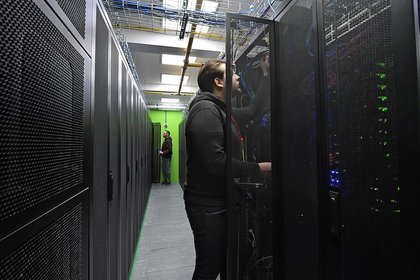
Russia's Ministry of Energy has proposed a "take or pay" mechanism for electricity purchases by data centers and crypto miners, according to a draft government resolution sent for approval on October 30 by minister Sergei Tsivilev to Prime Minister Mikhail Mishustin, as well as to the Ministry of Economic Development and the Federal Antimonopoly Service, Vedomosti reports.
The document covers all data centers and mining companies with capacity of 670 kilowatts or more and sets a minimum payment threshold. Facilities up to five megawatts would have to pay 70 percent of declared capacity starting in January, regardless of consumption.
For sites between 5 and 50 megawatts, a four-stage scale applies: 15 percent in the first year, 30 percent in the second, 50 percent in the third and 70 percent only in the fourth. Facilities above 50 megawatts would face a six-stage scale. The ministry plans to count years from the actual grid connection rather than from 2027, meaning many large facilities would immediately owe at least 70 percent.
A ministry representative said the initiative is being discussed in a working group and is in the final stage of approval, arguing it is needed to correct the cost imbalance for other consumers.
The Coordination Council for Data Centers and Cloud Technologies, which unites major data center operators, believes the proposal would worsen the industry's situation. Its CEO, Dmitry Bedernikov, said payback periods for new projects would grow again, the cost of renting rack space would jump 20-25 percent, and the country's capacity shortage would deepen.
Energy expert Kirill Rodionov said the regulator views the data center segment as a source of funds for modernizing the power grid, since current revenues are insufficient to support infrastructure. Tsivilev warned in autumn 2024 that energy reserves remaining after the collapse of the USSR were exhausted and the sector lacked financing, noting a year ago that without higher spending on the energy complex the economy would lack necessary capacity.
Source: Lenta.RU
Ready to Modernize Your Business?
Get your AI automation roadmap in minutes, not months.
Analyze Your Workflows →