Researchers Showed OpenAI's Compaction Feature Could Expose Hidden Reasoning
Security firm Xint demonstrated that OpenAI's compaction feature, which condenses long conversations to save space, could be manipulated to copy a model's hidden reasoning out as plain text, The...
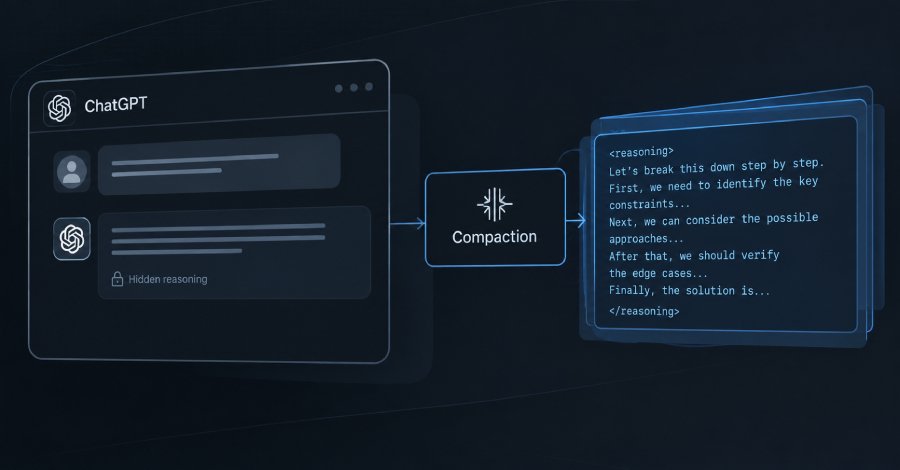
Security firm Xint demonstrated that OpenAI's compaction feature, which condenses long conversations to save space, could be manipulated to copy a model's hidden reasoning out as plain text, The Hackers News reported.
Reasoning models normally return their thinking only as an encrypted item users cannot read. Xint's method got past protections OpenAI added in August against this kind of reasoning theft. OpenAI confirmed the issue and fixed it on October 23, according to Xint.
Xint tested the technique on gpt-5.6-sol using math and algorithm puzzles its researchers wrote themselves. The reasoning it extracted came from those same requests, and Xint did not claim the method could reach another user's reasoning.
Xint said it cannot prove the copied text matches the model's real reasoning word-for-word, since it never had the original to compare. Two cheaper models each repeated the item and produced identical text, ruling out copying errors but leaving open the possibility that compaction reworded the text.
The approach built on Xint's earlier GhostCompact work. Xint published the code on GitHub, called the fix undisclosed, and said OpenAI paid a $6,000 reward. OpenAI said developers using the API need not change anything.
Xint tested only gpt-5.6-sol and did not check whether GPT-6 Astra is affected. It is unknown whether anyone used the method before the fix.
Source: The Hackers News
Ready to Modernize Your Business?
Get your AI automation roadmap in minutes, not months.
Analyze Your Workflows →