Researchers Find Months of Prompt Theft at AI Inference Providers; OpenRouter Cuts Three
Attackers stole data from inside three AI inference providers for months without any of the companies noticing until researchers alerted them, industrial cybersecurity firm Dragos reported this...
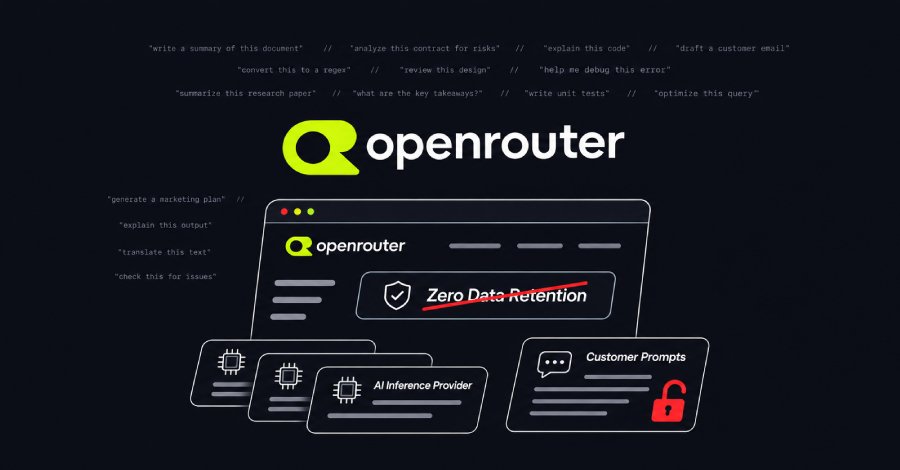
Attackers stole data from inside three AI inference providers for months without any of the companies noticing until researchers alerted them, industrial cybersecurity firm Dragos reported this week. Some of the stolen requests carried the Zero Data Retention flag, meant to signal that a prompt is never stored.
OpenRouter, a gateway routing customers' AI requests to third-party providers, said it removed three providers from its platform, stripped 125 endpoints of Zero Data Retention eligibility, and notified potentially affected customers. The company said it found no breach of OpenRouter itself.
The earliest breach began in mid-July. Dragos based its findings on canary token research that seeded about two million prompts with unique web links and credentials between July and November, then watched for their use. A planted secret can only be learned in one place, so any use of it means someone read the prompt carrying it.
The largest breach involved a couple hundred AWS keys, each sent in exactly one request to one provider during short windows in late October. Every request in those windows was stolen, including some the provider had rejected before a model ran, suggesting traffic was copied at first arrival rather than deeper in the inference stack. The thief tested keys within hours, listed S3 buckets, searched Secrets Manager and Parameter Store, and tried to create Bedrock API keys and IAM users, generating tens of thousands of AWS API calls.
One attacker appears to have compromised two providers at once, using secrets from both from a single rented server. On November 1 the same attacker deployed ARTEX, an AI-driven penetration testing framework, solely to confirm held keys were still live. "A privacy flag doesn't help when the attacker is already inside," wrote HD Moore, the firm's chief research officer.
A second finding involved no break-in at all: sellers on an AI inference marketplace listed models at the lowest prices, enabled request logging, and collected what passed through. One operator, on a Mac on home broadband in France, took passwords from two prompts and typed root SSH login attempts by hand. A Chinese AI lab the research does not name fetched secret links from more than half of seeded prompts sent to its models between July and October, including about two-thirds marked Zero Data Retention.
OpenRouter said the 125 endpoints removed cover providers flagged by researchers plus others cut as a precaution, and that any endpoint will need assurances and validation before its status returns. The gateway is adapting the testing approach for ongoing checks and verifying network paths for third-party forwarding.
Phala said an attacker took control of an inference server and could view request data in transit, contained on November 8; requests to DeepSeek V4 Flash 0731 through the gateway between October 21 and November 8 should be treated as exposed. Together AI said an unauthorized party downloaded stored prompt samples after an AI coding agent committed a credential to its public GitHub repository. Novita confirmed a routing configuration issue sent some MiniMax requests to MiniMax's official API. Dragos and OpenRouter have not named the three breached or removed providers, nor said whether they are the same.
Moore advised that a privacy flag binds only the first hop, that self-hosting is the only option where no third party reads a prompt, and that customers should choose upstream providers themselves and avoid reseller marketplaces. Planted fake credentials, he wrote, serve as tripwires.
Source: The Hackers News
Ready to Modernize Your Business?
Get your AI automation roadmap in minutes, not months.
Analyze Your Workflows →