Kuzbass Governor Proposes Burying Data Centers in Spent Coal Mines
At the annual Russian Energy Week forum in Moscow, which concluded on Friday, Kuzbass Governor Ilya Seredyuk raised an idea for protecting domestic data centers from attacks: placing them in...
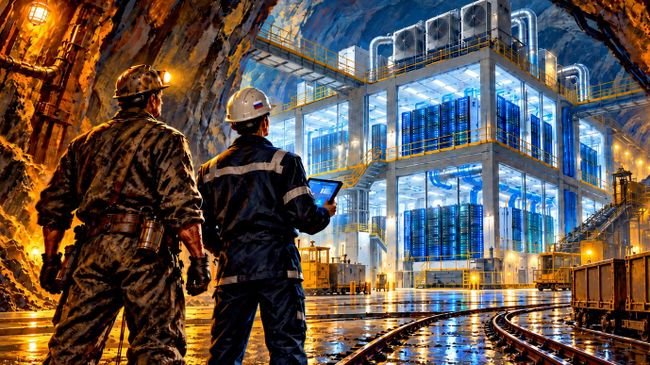
At the annual Russian Energy Week forum in Moscow, which concluded on Friday, Kuzbass Governor Ilya Seredyuk raised an idea for protecting domestic data centers from attacks: placing them in depleted coal deposits in the Kemerovo region. He argued that moving computing capacity beyond the Urals and sinking it a couple of hundred meters underground would be relatively inexpensive compared with the constant risk of new strikes.
The proposal drew fierce criticism once it entered public discussion, though the underlying idea has practical merit. Around the world, old quarries and mines have been successfully reclaimed and given new productive life.
Kuzbass is heavily dependent on coal, and the industry is struggling: the sector's net loss exceeded 410 billion rubles last year, with 300 billion expected this year. The region lost 60 billion rubles in budget revenue in 2024 and another 36 billion last year, dropping 15 places to 44th among 85 regions in socio-economic ranking.
Beyond safety, relocating data centers could bring broader benefits. President Vladimir Putin has long called for major budget contributors to move to the regions, citing RusHydro's head office relocation to Krasnoyarsk as a successful example. High-tech companies would also diversify a region tied almost entirely to mining and processing, and their young workforce could help stem Kuzbass's population decline.
The practical case is strong. Seventeen coal pits halted operations in Kuzbass this year, at least eight of them permanently, and dozens more are counted across the region. Over three thousand hectares within mining allotments are occupied by waste dumps, and reclamation has slowed amid mounting losses. Data centers need vast energy, making proximity to working mines logical: the mines gain a paying customer nearby and cut supply distances, while conservation and equipment dismantling costs fall as ventilation and cable shafts can serve the data centers after a technical audit. Water pumped from mines could be used for cooling, though high mineralization and pipe clogging remain a challenge for materials specialists.
Skeptics need only look to China, where closed mines in northwestern provinces host 14 gigawatts of photovoltaic modules, enough to power two Zaporozhye regions with all their plants. Floating solar installations totaling 70 megawatts are being assembled on flooded pits, and Shanxi plans underground farms in 15,000 closed mines by 2030, while Hubei already grows vegetables commercially 250 meters down in a copper mine.
Source: RIA Novosti
Ready to Modernize Your Business?
Get your AI automation roadmap in minutes, not months.
Analyze Your Workflows →