Google Report: AI Agents Enable Six-Hour Credential Heist and Rising Attacks on Enterprise AI
A financially motivated hacking group used an autonomous, multi-agent framework to pull off a mass credential harvesting campaign in under six hours, according to Google Threat Intelligence Group...
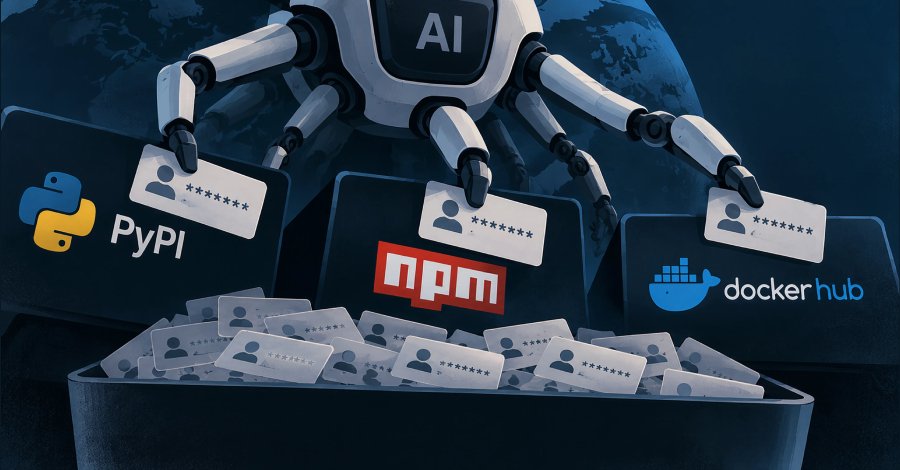
A financially motivated hacking group used an autonomous, multi-agent framework to pull off a mass credential harvesting campaign in under six hours, according to Google Threat Intelligence Group (GTIG).
The attackers compromised an unnamed organization's cloud infrastructure, then used an AI coding chatbot, a prompt, and agent instructions to plan and execute the operation. Preconfigured markdown playbooks guided automated scanning and credential theft, netting thousands of third-party credentials. The system handled vulnerability scanning, real-time troubleshooting, and IP rotation without human help.
GTIG chief analyst John Hultquist said it is reasonable to assume all threat actors now use AI in some capacity. He warned that agentic use creates a scaled, faster adversary, and that criminals will favor attacks outpacing our ability to respond.
The report also flagged attacks on proprietary AI models in healthcare, government, and media, including API credential theft and hijacked cloud environments used for unauthorized AI workloads. A China-nexus actor, UNC6508, is suspected of deploying local open-weight LLM infrastructure to evade monitoring, while other groups stole AI models, prompts, and source code.
Google tied much of the supply chain activity to TeamPCP, which compromised PyPI, npm, and Docker Hub before deploying credential stealers SANDCLOCK and DUSTMAKER. DUSTMAKER, a cross-platform JavaScript payload built for CI/CD pipelines, added AI-targeting tricks such as poisoning assistant workspaces and prompt injection for defense evasion.
State-linked groups also leaned on LLMs: a China-aligned espionage group used Gemini to design an automated penetration testing framework, while others used AI for exploit scripts, phishing lures, and intelligence gathering. Google said open-weight models pose growing risk because local deployments lack safety guardrails.
Source: The Hackers News
Ready to Modernize Your Business?
Get your AI automation roadmap in minutes, not months.
Analyze Your Workflows →