AI Is Reshaping Security Operations - and the Careers Within Them
AI is steadily absorbing the core tasks that have long defined security analysts' work: investigating alerts, gathering evidence, correlating activity across tools, and carrying out response...
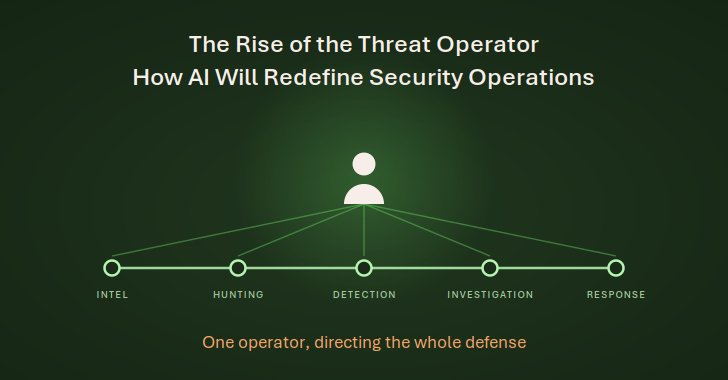
AI is steadily absorbing the core tasks that have long defined security analysts' work: investigating alerts, gathering evidence, correlating activity across tools, and carrying out response actions. As these capabilities mature, security operations centers will see major shifts in how work is organized, how decisions get made, and what is expected of the people defending organizations.
For security professionals, this opens the door to a broader role. With AI handling more of the operational load, analysts can move past individual alerts and investigations to directing defense across the entire security lifecycle. The emerging role is what's being called the Threat Operator: an AI-native professional who translates business risk into defensive priorities, directs AI-driven operations, and exercises judgment over the decisions those systems make.
The traditional SOC grew around specialized functions - threat intelligence, detection engineering, threat hunting, alert investigation, and incident response - each with its own tools and workflows, often connected through tickets and manual handoffs. AI is beginning to tie these activities together, with agents coordinating workflows and carrying context from one stage to the next. That shifts where professionals add the most value: a Threat Operator sets priorities based on exposure, business operations, and the threat landscape, decides how much autonomy AI should have, and judges whether the operation is actually improving security. The result is a gradual move from human-in-the-loop to human-on-the-loop, with a human remaining accountable throughout.
Junior analysts may feel the biggest effects. The SOC has long served as cybersecurity's entry point, where analysts learned through alert triage, evidence collection, investigations, and escalation - repetitive work that also functioned as an apprenticeship. As AI takes on more of it, organizations will need to rethink how that experience is gained. AI can also open a different path: junior Threat Operators can gain supervised exposure to a wider range of activities, reviewing the evidence behind AI-generated findings and learning from more experienced colleagues - but only if organizations invest in technical fundamentals and structured mentorship.
The skills required build on traditional proficiency. Threat Operators will need to translate business security risks into defensive objectives AI systems can execute, understand architecture, critical assets, and operational dependencies, and evaluate hypotheses, validate evidence, and set escalation criteria. The role combines four areas of expertise: business security risk, threat and adversary understanding, defensive operations, and AI orchestration and judgment.
The role should become a career path with growing responsibility, with senior operators defining autonomy boundaries, governing consequential actions, and measuring whether operations are reducing organizational risk. People may enter from investigations, threat intelligence, detection engineering, incident response, security architecture, or risk management. As the article puts it: the old SOC trained people to operate tools; the AI-native SOC has to train them to operate the defense.
Source: The Hackers News
Ready to Modernize Your Business?
Get your AI automation roadmap in minutes, not months.
Analyze Your Workflows →