186 Fake AI Domains Found Serving ClickFix Lures, Browser Hijackers and Search Hijack Extensions
Cybersecurity researchers have uncovered a network of lookalike domains posing as popular artificial intelligence tools, used to push ClickFix-style lures, browser-hijacking malware and...
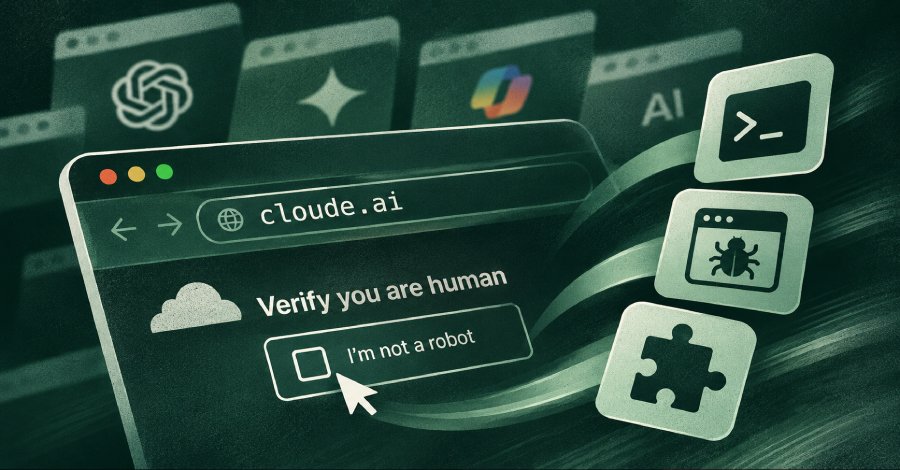
Cybersecurity researchers have uncovered a network of lookalike domains posing as popular artificial intelligence tools, used to push ClickFix-style lures, browser-hijacking malware and search-hijacking extensions. Island, the company behind the findings, calls the delivery pattern TypoPrompting - AI-app lookalikes that turn an attempt to reach a familiar tool into a prompt to verify, install or run something else.
The campaign spans 186 bogus domains covering 27 AI brands, among them Anthropic Claude, OpenAI ChatGPT, Google Gemini, Microsoft Copilot, Grok, DeepSeek, Mistral, Perplexity, Midjourney, ElevenLabs, Lovable and Cursor. Examples include cloude[.]ai, chatlgpt[.]com, geimini[.]com, griok[.]com and preplexity[.]ai. Registration records show some, such as cloude[.]ai and cluade[.]ai, were registered as early as July 13, 2023.
One route leads to a ClickFix lure that serves a PowerShell command through a fake Cloudflare verification page, after a redirect chain fingerprints the browser and collects the public IP address. Island said the fingerprint gate script spans 211 entry domains, including lookalikes of banks, insurers and enterprise software such as Scotiabank, Charles Schwab, Blue Cross Blue Shield, Verizon, ServiceNow and Microsoft Azure. The lures come in three forms: fake verification pages on Windows that run a clipboard command, terminal or security updates on macOS that run a shell command, and archive download pages instructing users to extract and run an executable.
A second route involves eight typosquat domains for Claude, DeepSeek, Copilot, ElevenLabs and Voice AI that lead to fake "Security Check" pages delivering a browser-hijacking app called Net Guard. According to Island lead security researcher Oleg Zaytsev, the download is the unmodified Microsoft Store app, byte-for-byte identical to the legitimate Net Guard and carrying Microsoft's own Store signature. The hidden browser control ships with every copy and switches itself on without asking, waiting until the user is idle before taking over Chrome's search settings and running scripts on instructions from the operator's server.
The third route uses the Perplexity lookalike preplexity[.]ai, which redirects to a Chrome Web Store extension called Quick Search. Island said the extension needs no executable JavaScript or declared permissions for its main action; its manifest overrides the default search provider with find.flashysearches[.]com, sending queries to a third party. In a workplace, those queries can include internal hostnames, customer names and project details. Quick Search belongs to a set of 16 extensions, including GPT for Chrome with 80,000 users, collectively claiming 972,000 users as of November 3, 2026.
"An address one letter away from an AI tool can lead to a very different request," Island said. "As these services become part of everyday work, reaching the right one should be a managed path, not a test of typing accuracy."
Source: The Hackers News
Ready to Modernize Your Business?
Get your AI automation roadmap in minutes, not months.
Analyze Your Workflows →